What makes someone ride a flying robo-taxi?
For my final project in the Writing Hub’s UX Writer Academy, I designed the content of the onboarding and booking experience for Sky-Glyde, a (fictional) new self-piloting eVTOL vehicle service.
.
Background
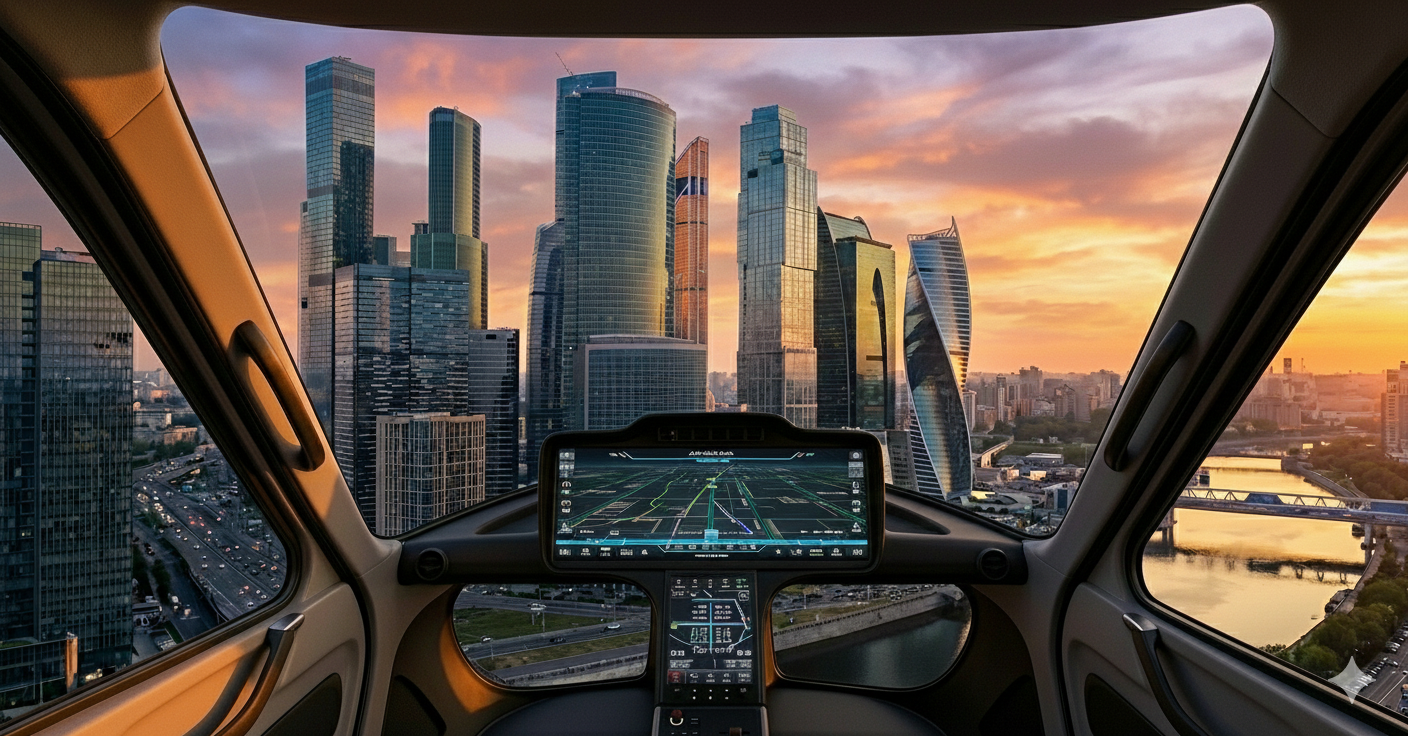
Sky-Glyde is Glyde's new self-piloting eVTOL (electric vertical take-off and landing) vehicle service. Building on Glyde's success in autonomous ground transportation, Sky-Glyde aims to reduce commute times for its users with two-passenger electric drones.
Challenge
Create an onboarding flow that introduces Sky Glyde to existing Glyde users. But! Some constraints need to be addressed in the onboarding flow:
Skyport-only pick-up & drop-off: Sky Glydes fly from certified tower locations, instead of car rides from fixed addresses.
2-passenger maximum: Limits had to be explained.
Permission requirements: Users are required to enable enhanced location access and agree to a safety waiver.
11-Star experience: I set a goal to create an in-flight experience that matched users’ expectations.
Executive Summary
Burning Question: Since no self-piloting eVTOL service exists yet, what content approach would build enough trust for users to try autonomous aerial transportation for the first time?
How I answered it:
User research: User interviews, conversation mining, competitive analysis
Designed content for the onboarding/booking flow and in-flight experience
Usability testing of two variants of the onboarding/booking flow
Built a final prototype
Research & Content
-
Combined user interviews (4 participants), conversation mining from social plaforms, and competitive analysis of ride-sharing apps and autonomous transportation product providers.
-
Urban commuters aged 30-45 who currently use ride-hailing services and represent early adopters for new transportation technology.
If I had more time/resources, User testing would be expanded to include different types of potential user groups, like tourists, retirees, and business travelers. -
Safety concerns override everything: Users consistently prioritize safety over convenience or innovation. They want predictable behavior, not whizzy innovations.
Human oversight is non-negotiable: Despite accepting autonomous technology, users want evidence of human supervision and intervention capabilities.
Transparency builds trust: Users want comprehensive real-time information while they’re in the air. Transparency about limitations builds more trust than overstating capabilities.
I also used an LLM to assist my competitive analysis by searching other sources, then gathering my research and its own findings into an interactive database for easy reference..
Content Approach - Wireframes
Next, I applied the insights to content design itself and created the onboarding/booking flows. Here are several screens and how the insights informed the content decision.
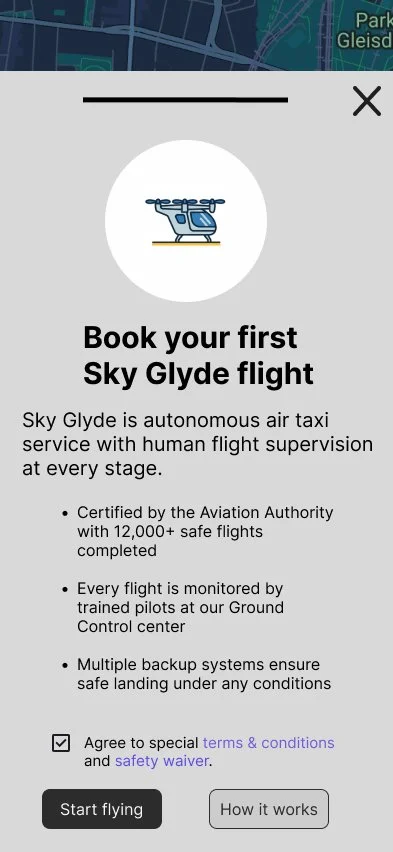
Insight: Lead with human oversight messaging throughout onboarding, emphasizing "trained flight operators monitor every journey" and "emergency protocols connect directly to human responders" rather than automated safety systems.
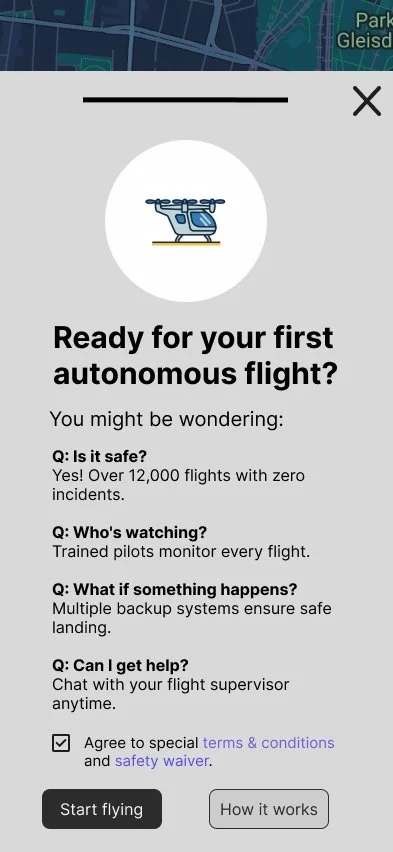
Insight: Lead with human oversight messaging throughout onboarding, emphasizing "trained flight operators monitor every journey" and "emergency protocols connect directly to human responders" rather than automated safety systems.
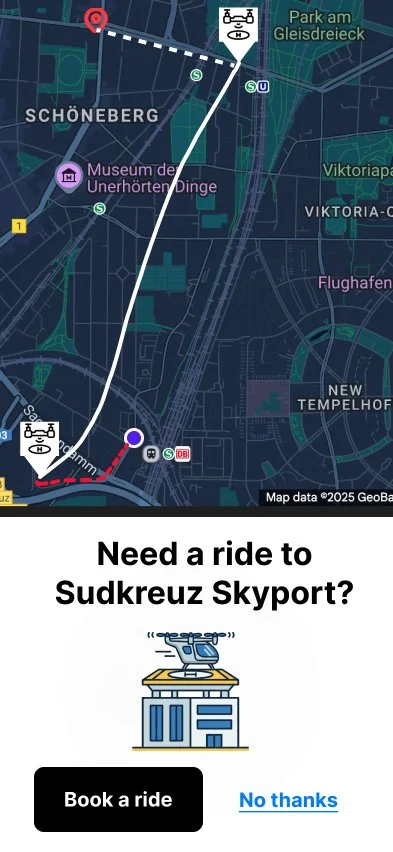
Insight: Create seamless multi-modal integration with ground transportation, allowing users to book complete door-to-door journeys and automatically handle vertiport access and transfers.
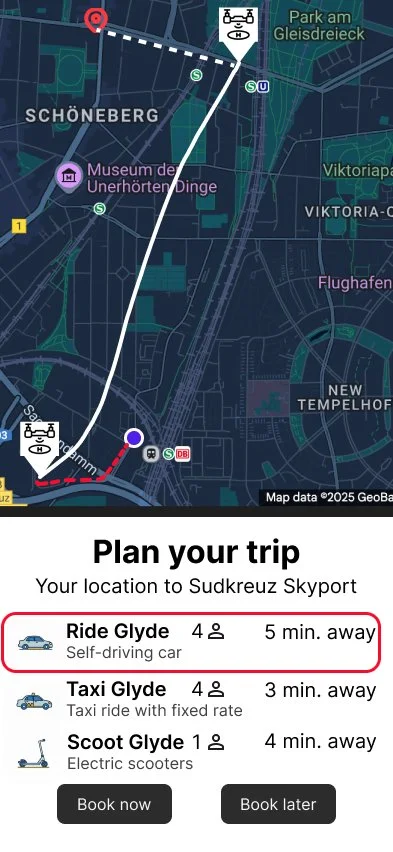
Insight: Create seamless multi-modal integration with ground transportation, allowing users to book complete door-to-door journeys and automatically handle vertiport access and transfers.
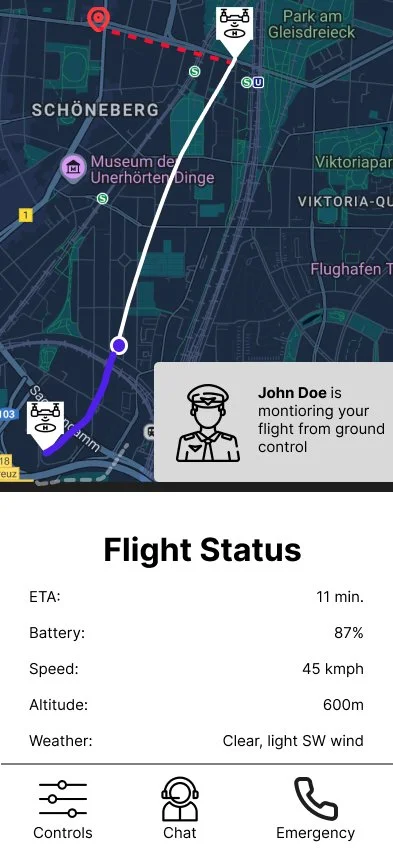
Insight: Display real-time flight information prominently, including altitude, weather conditions, route progress, and system status, to give users the informational control they crave, even when they can't physically control the aircraft.
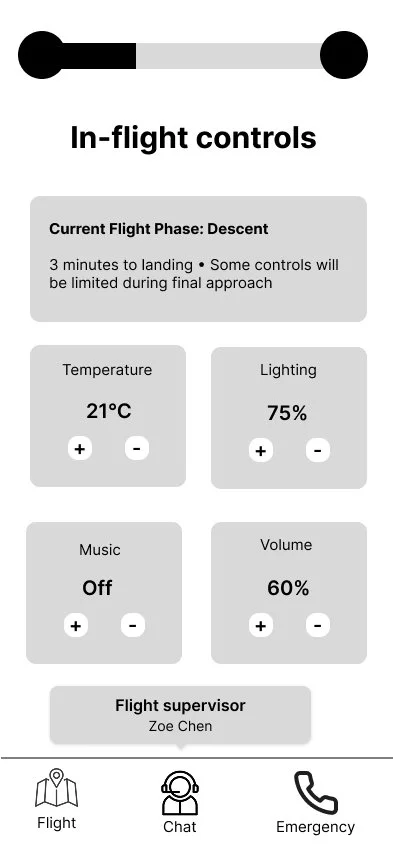
Insight: Position within familiar taxi experience expectations by including climate control, music options, and communication features that users expect from premium ground transportation services.
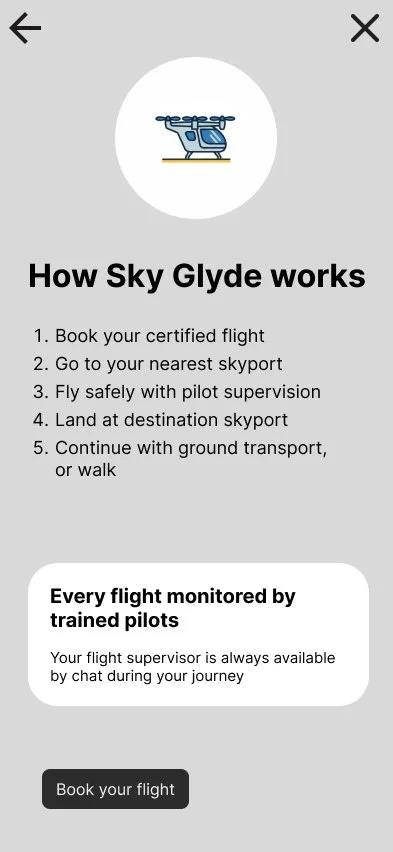
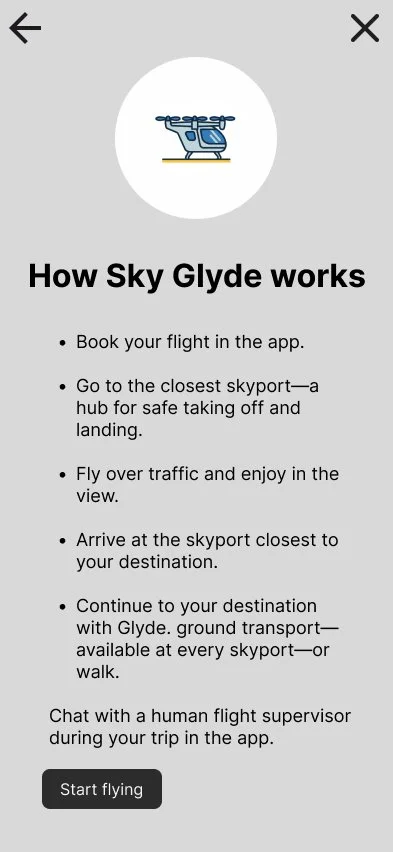
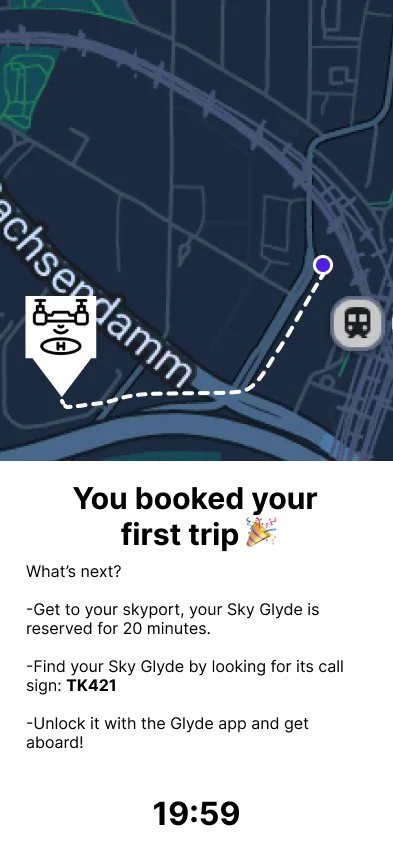
Insight: Focus safety messaging on predictable performance rather than cutting-edge technology, using language like "consistent flight patterns" and "follows all aviation protocols exactly" to build trust through reliability.
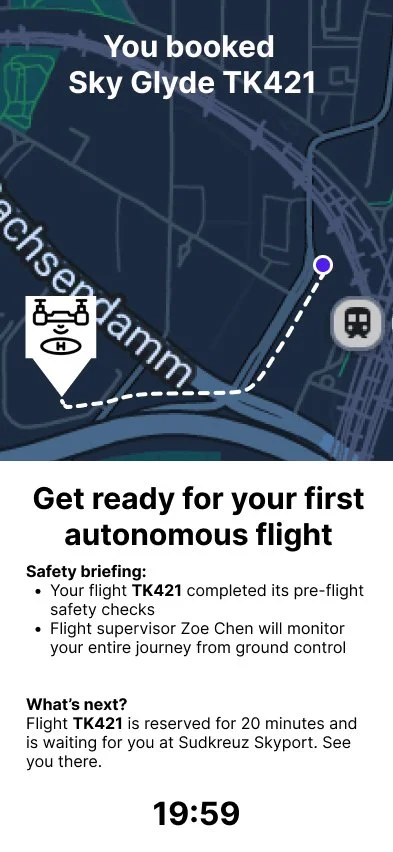
Insight: Focus safety messaging on predictable performance rather than cutting-edge technology, using language like "consistent flight patterns" and "follows all aviation protocols exactly" to build trust through reliability.
Content Approach - Usability testing
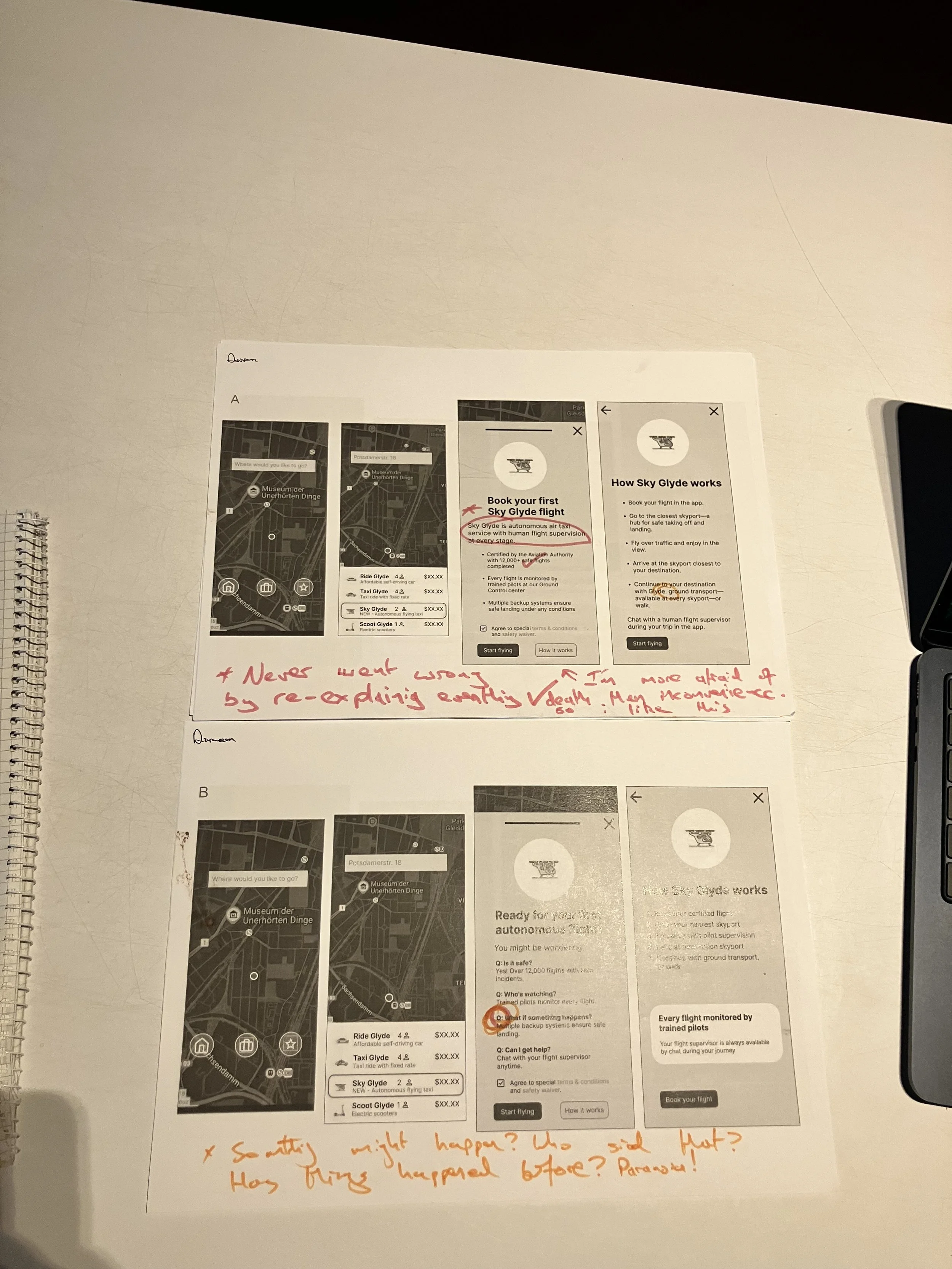
Although the research helped me understand my users and their expectations, I was still curious how the users would feel when they’re in the app itself. So, I conducted in-person A/B tests with several participants from the initial user research.
Version A: Feature-focused, with a conversational style.
Version B: Safety-focused, with a clear, no-nonsense style.
Key Learnings:
Participants appreciated the detailed explanations of backup systems, human-pilot monitoring, and other reassuring safety messaging.
There is some confusion around the multi-modal approach for booking rides to and from the Skyports. Is it mandatory? Why are you offering this?
If I had more time/resources, I’d recruit more users for testing and shuffle the version order (B/A testing!). And I’d break it out over several days, so the content could be iterated and retested for new users.
Insight: Lead with human oversight messaging throughout onboarding, emphasizing "trained flight operators monitor every journey" and "emergency protocols connect directly to human responders" rather than automated safety systems.
Insight: Create seamless multi-modal integration with ground transportation, allowing users to book complete door-to-door journeys and automatically handle vertiport access and transfers.
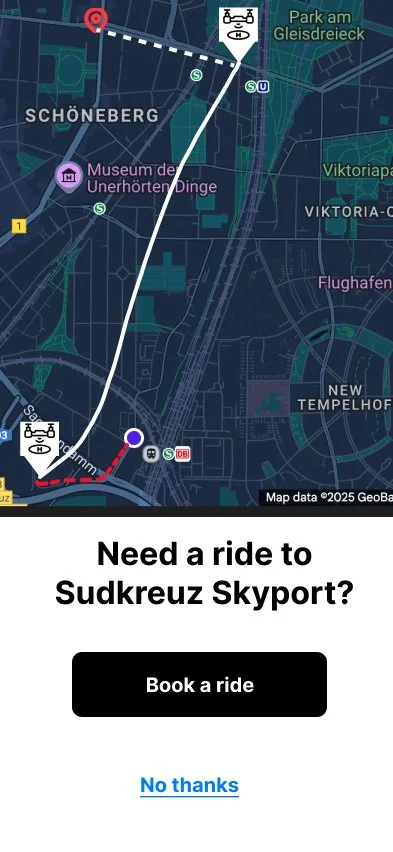
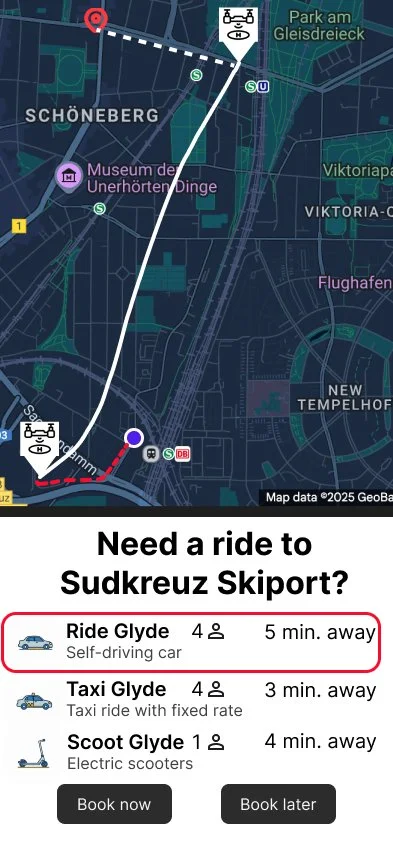
Insight: Display real-time flight information prominently, including altitude, weather conditions, route progress, and system status, to give users the informational control they crave, even when they can't physically control the aircraft.
Insight: Position within familiar taxi experience expectations by including climate control, music options, and communication features that users expect from premium ground transportation services.
Insight: Focus safety messaging on predictable performance rather than cutting-edge technology, using language like "consistent flight patterns" and "follows all aviation protocols exactly" to build trust through reliability.
Insight: Implement progressive disclosure onboarding starting with simple "air taxi" terminology and safety basics, then gradually introducing flight information displays and emergency procedures as users become more comfortable.
Final Prototype
What changed?
Applied safety-focused messaging from Version B to final prototype to build trust, particularly
First flight education screens
location access permission screen,
how Skyports Work explanation screen
Added an opt-in option for booking rides to Skyport and final destination to reduce confusion in flow.
Added safety briefing after Sky Glyde is booked for user reassurance
How I used AI
I used generative AI strategically throughout the process of my Sky Glyde project, including:
Identified key user language patterns - Analyzed Reddit, social media, and review platforms to mine conversations about autonomous vehicles and flying taxis. Extracted common words, phrases, concerns, and desires related to autonomous vehicles and drones with citations
UX research and competitive analysis - Analyzed autonomous vehicle experiences (Waymo, Cruise, Lyft) and eVTOL systems (EHang, Volocopter) to inform design decisions and created an interactive database.
Icon and map creation - Guided me on adding interactive maps with custom skyport locations to my Figma prototype and created Sky Glyde’s vehicle icons.
Reviewed my wireframe solutions - Checked my wireframes against conversation mining insights to ensure consistent, safety-first messaging.
Creating a complete interactive prototype - Built a full React/JSX prototype covering the entire user journey from map input to in-flight controls in an iterative design process.